
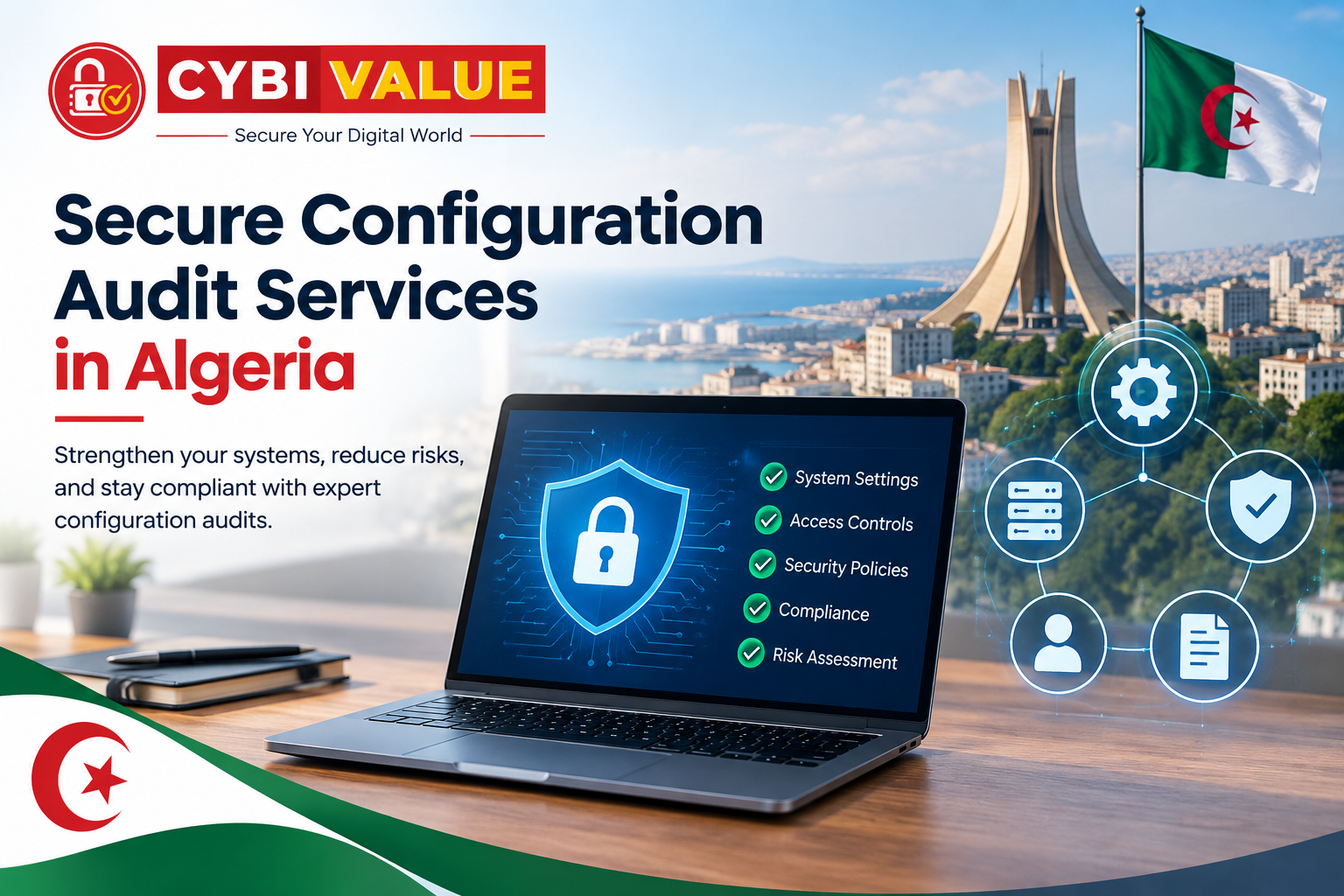
Secure Configuration Audit Services in Algeria
Description
# Secure Configuration Audit Services in Algeria
In today’s connected business world, secure system configuration is a key part of cybersecurity. Servers, cloud platforms, networks, databases, applications, firewalls, and endpoints all depend on correct security settings. A small configuration error can create a path for attackers, expose sensitive data, or weaken an organization’s overall security. **Secure Configuration Audit Services in Algeria** help organizations find these weaknesses and improve their security posture.
A configuration audit is a structured review of technology settings against security best practices, internal policies, and relevant compliance needs. The goal is to identify unsafe, outdated, or unnecessary settings before they become serious security issues.
## What Is a Secure Configuration Audit?
A secure configuration audit examines how IT systems are set up and checks whether their security controls are properly enabled. The review may cover operating systems, servers, databases, network devices, cloud services, web servers, applications, and security tools.
During an audit, security specialists review settings such as access controls, password policies, user privileges, open ports, encryption, logging, firewall rules, authentication controls, software versions, and unnecessary services.
The audit can also identify default settings, excessive permissions, weak protocols, missing security patches, and other configuration risks.
## Why Configuration Security Matters
Even when an organization has strong security tools, incorrect settings can reduce their effectiveness. For example, a firewall may exist but allow unnecessary traffic. A cloud storage service may be protected but accidentally configured for public access. An account may have more privileges than required.
These issues can increase the risk of unauthorized access, data exposure, malware infections, and service disruption.
Regular configuration audits provide organizations with a practical way to discover such weaknesses and correct them before attackers can exploit them.
## Key Areas Covered by an Audit
A professional secure configuration audit can review several areas of an organization’s technology environment.
**Server Security:**
Auditors check operating system settings, services, ports, user accounts, permissions, patch levels, and security controls.
**Network Security:**
Firewalls, routers, switches, VPNs, and other network devices can be reviewed for unsafe rules, weak protocols, and unnecessary access.
**Cloud Configuration:**
Cloud environments require careful management of identity, storage, network access, encryption, and permissions. Audits can help detect misconfigured cloud resources.
**Database Security:**
Database accounts, privileges, authentication, encryption, remote access, and logging can be examined to reduce data security risks.
**Application Configuration:**
Security settings, authentication, session controls, error handling, encryption, and exposed services can be reviewed.
**Access Management:**
Auditors assess whether users have suitable permissions and whether administrative access is properly controlled.
## Benefits of Secure Configuration Audits
A configuration audit can provide several benefits. It helps organizations discover security gaps, reduce attack surfaces, improve access controls, and strengthen system protection.
It can also support compliance efforts by providing evidence that security settings are reviewed and managed. Clear audit reports can help technical teams understand each finding and prioritize remediation.
Another benefit is improved visibility. Organizations may have many systems and devices, making it difficult to know whether every environment follows the same security standards. An audit creates a clearer picture of the current configuration state.
## How the Audit Process Works
A typical audit begins with scope definition and asset identification. The security team determines which systems, devices, applications, and cloud environments will be reviewed.
Next, configuration data is collected through approved methods. Security specialists compare the collected settings with recognized security practices and organizational requirements.
Potential issues are then documented and assessed according to their security impact. The final report normally includes findings, affected systems, risk details, and recommended corrective actions.
After remediation, organizations can perform a follow-up review to confirm that important configuration issues have been addressed.
## Why Choose Professional Services?
Internal IT teams may manage daily operations, but an independent security review can provide another level of assurance. Experienced security professionals can identify configuration weaknesses that may be overlooked during routine administration.
Professional services can also provide structured documentation, practical remediation guidance, and repeatable audit processes that support long-term security improvement.
## Secure Your Systems with CybiValue
Organizations in Algeria can strengthen their cybersecurity strategy by regularly reviewing system configurations and addressing security weaknesses. **CybiValue** provides cybersecurity services designed to help organizations identify risks and improve their defensive controls.
Learn more about **Secure Configuration Audit Services in Algeria** through [CybiValue](https://www.cybivalue.com/?utm_source=chatgpt.com).
For inquiries, contact **[contact@cybivalue.com](mailto:contact@cybivalue.com)** or call **9364783713**.
Recent Classifieds

How to Choose the Best Independent Villa in Hyderabad: Location, Amenities & Key Factors
Hyderabad, Telangana India 501401

Construction EPC ERP Software
800,000
H-107, Sector-63, Noida - 201301, Uttar Pradesh, India

Launch Your Own UrbanClap Clone with 50% OFF!
Germany

Original Agarwal Packers and Movers in Delhi – Moving & Logistics Services
0.1
New Delhi-110034

Law Firm Marketing Services to Grow Your Legal Practice
SCO 22-23,V'Lante, D block, Sector 83, Gurugram, Haryana 122012
Wrapping Machine Manufacturer in Kolkata | Eastern India
kolkata
Related Classifieds

HP Printer Support
$99
Miami, FL, USA

Dell Laptop Screen Replacement
₹250
Dwarka, New Delhi, Delhi, India

Leading Cross Platform / Hybrid App Development Company In Pune | Contact Us
₹0
4th Floor, Godrej Avanti, Shankar Sheth Road, Swargate, Pune, Maharashtra, 411042

Best Network Virtualization Services in Mumbai
Anunta Technology Management Services Ltd.Level 2, Block B6, Nirlon Knowledge Park, Off Western Express Highway, Goregaon East, Mumbai – 400 063

Cyber Security Consulting Firms | network security companies in usa
₹32,216
4063 Salisbury Road Suite 107 Jacksonville FL 32216

Why Digital Address System Ghana Post GPS Become Popular?
Ahmedabad, Gujarat, India