
About
Dental Root Canal Treatment: Everything You Need to Know Before Treatment
There are very few things people dread more than being told they need a root canal.
The word alone makes people tense up. Most patients who’ve heard it describe the same reaction a kind of quiet dread followed by an immediate Google search that usually makes things worse, not better.
Here’s the reality though. Most of what people fear about dental root canal treatments is outdated. The horror stories floating around are from a different era of dentistry and what actually happens today is genuinely not what most people imagine.
This article covers exactly what the procedure involves, why it’s done, what it costs in Ahmedabad, and what to expect from start to finish. Real information, no dramatisation.
Why Dental Root Canal Treatments Exists
Your tooth has layers. The outer hard part is enamel. Under that is dentine. And right at the core running through the root down into the jawbone is the pulp. Nerves, blood vessels, connective tissue. That’s what keeps a tooth alive during development.
When bacteria get deep enough into a tooth through a cavity that’s been ignored, through a crack, through repeated work on the same tooth they reach that pulp. And once infection sets in there, it doesn’t resolve on its own.
It spreads. Into the root. Into the surrounding bone. And the pain that comes with a tooth infection at that stage isn’t subtle. A lot of people describe it as the kind of pain that wakes them up at night.
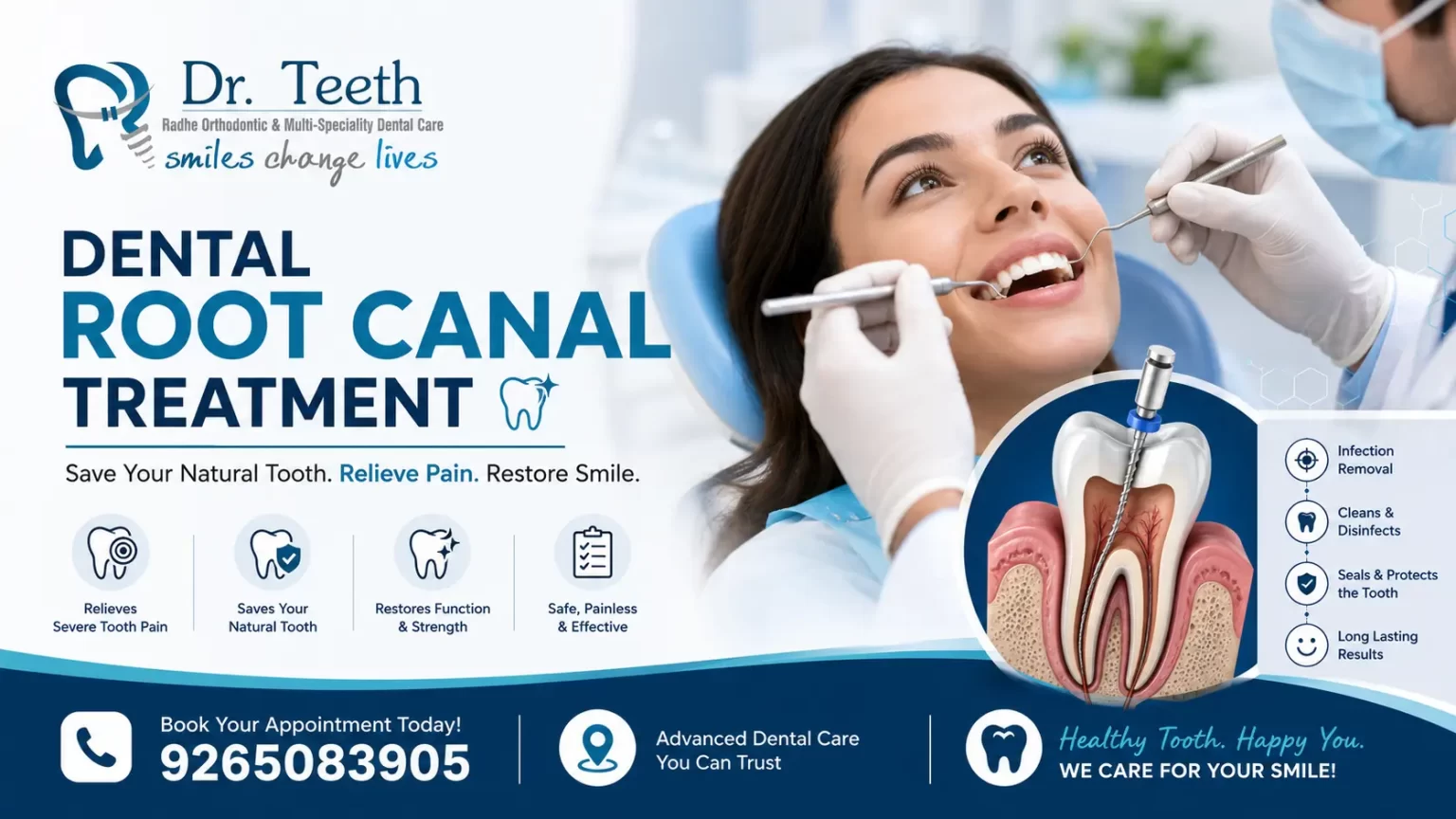
Dental root canal treatments removes that infected pulp, cleans and shapes the root canals, seals the space so bacteria can’t reenter, and saves the tooth structure. That’s the whole procedure. Remove the infection, protect what’s left.
Signs You Might Need One
People sometimes know something is wrong long before they act on it. A few things worth paying attention to:
Persistent toothache that doesn’t go away not just sensitivity when eating something cold, but a dull or sharp ache that sticks around.
Sensitivity to heat that lingers. Cold sensitivity is common with many minor issues, but heat sensitivity that stays for more than a few seconds points toward pulp involvement.
Swelling around the gum near a specific tooth. Sometimes with a small pimple-like bump that’s a sign of abscess.
Tooth that has gone noticeably darker than surrounding teeth.
A tooth that was recently cracked or had deep work done and now feels different.
Not every one of these means you definitely need root canal treatment. But they’re signals that the tooth needs a proper clinical evaluation sooner rather than later. Waiting typically means the infection spreads further and the treatment becomes more involved.
What the Root Canal Treatment Procedure Involves
This is where most of the fear lives. And it’s where the procedure itself usually surprises people most.
Diagnosis and imaging
Before anything starts, an X-ray confirms the extent of infection in the root and surrounding bone. This tells the treating root canal specialist dentist how many roots are involved, what the canal anatomy looks like, and what to plan for.
Anaesthesia
The area around the tooth gets numbed. Properly, thoroughly. This is what changed most in modern dentistry anaesthetic options and techniques are far more effective now than they were a generation ago. The procedure itself, once the area is numb, shouldn’t be painful. Most patients describe feeling pressure and vibration but not pain.
Isolation
A small rubber dam is placed around the tooth. This keeps the area dry and sterile during the procedure important for keeping bacteria from reentering the canals while they’re being cleaned.
Access and cleaning
A small opening is made in the crown of the tooth. Using very fine instruments, the pulp is removed from the chamber and the root canals. The canals are then shaped with progressively larger files this creates a tapering form that can be thoroughly cleaned and eventually sealed.
Irrigation with disinfectant solution happens throughout. This is a key part of the root canal treatment procedure that people rarely hear about it’s not just mechanical removal, it’s chemical disinfection of the entire canal system.
Sealing
Once the canals are clean, they’re filled with a material called gutta-percha a rubber-like substance that fills the canal space and prevents bacteria from getting back in. The access opening is then sealed.
Crown
This is the part that often isn’t mentioned upfront. A tooth that’s had dental root canal treatments has had its internal structure significantly altered. It’s more brittle. It needs protection. A crown a full covering over the tooth is placed to protect it from fracturing under normal bite forces.
Without the crown, a successfully treated tooth can still crack later. The crown is what keeps the result intact long-term.
Keywords
Dental Root Canal Treatment