
About
Teeth Cap Treatment: Everything You Need to Know Before Getting a Dental Crown
Nobody enjoys unexpected dental news. You go in for a check-up, come out with a treatment plan you weren’t prepared for, and suddenly you’re searching the internet at midnight trying to figure out what a crown actually is and whether you really need one.
If that sounds familiar this is a useful read.
Or maybe you’ve been looking into veneer treatment for Teeth Cap Treatment and landed here wondering how that’s different from a cap. Fair question. The two get mixed up constantly, and the difference does matter depending on what your tooth needs.
Let’s sort through it properly.
What Teeth Cap Treatment Actually Means
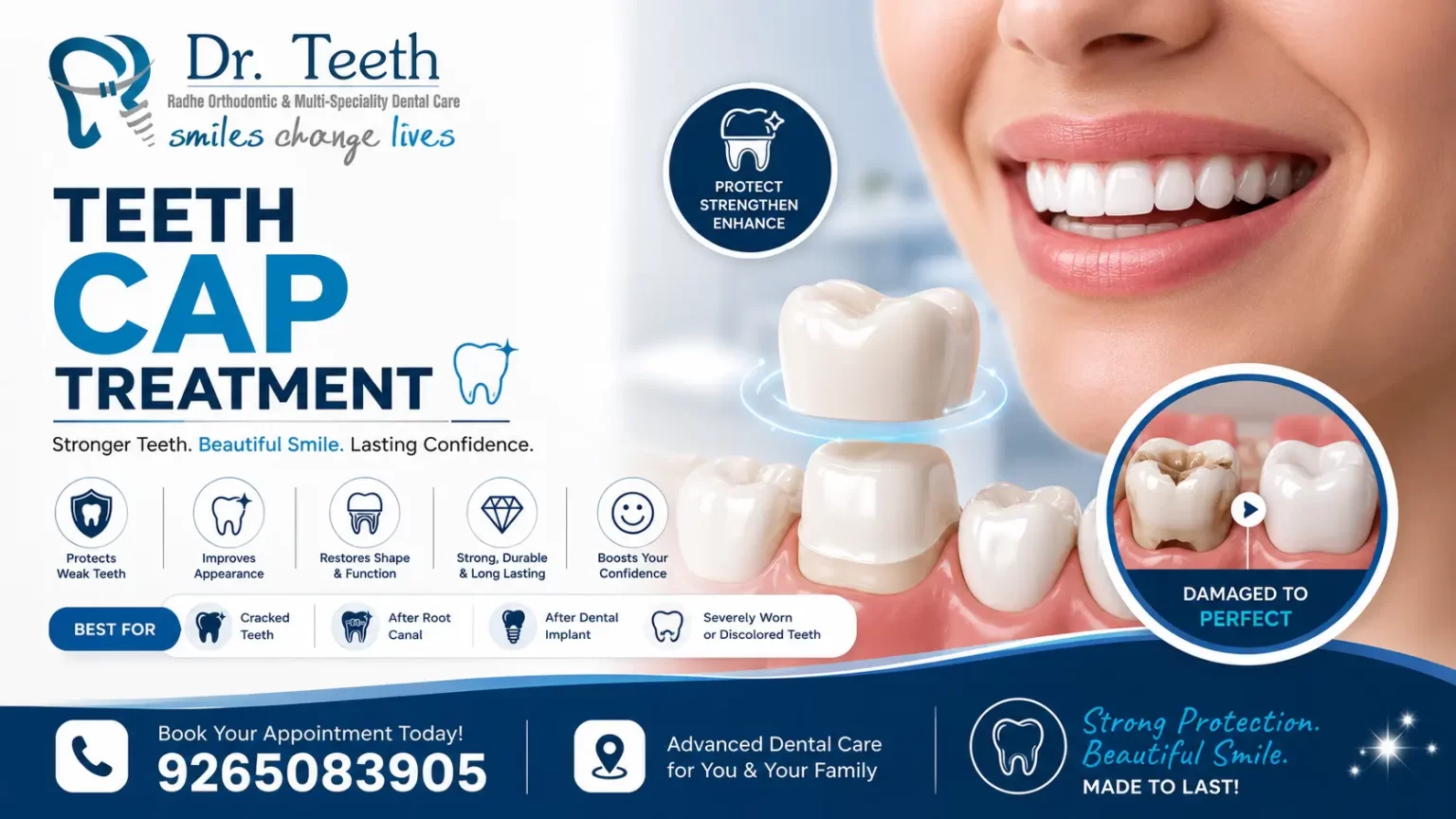
The phrase teeth cap treatment gets used loosely. Patients say “cap,” dentists say “crown” same thing. It’s a covering made to fit over a tooth that’s been damaged, decayed, or weakened to the point where a regular filling won’t hold things together.
A filling fills a gap. A teeth cap treatment rebuilds the whole outer shape of the tooth all the way around, top included.
When is it actually needed? A few situations come up repeatedly:
The tooth has cracked, and the crack is deep enough that leaving it unprotected risks splitting the root
Decay has eaten through so much of the tooth that what’s left can’t anchor a filling reliably
Root canal treatment has been done that tooth loses moisture over time and becomes brittle, so a cap protects it
An old large filling has cracked or started failing, and there’s not enough healthy tooth left to place a new one around it
What a crown does in all these cases is give the tooth a new outer surface strong, sealed, shaped to match your bite while protecting whatever structure still exists underneath.
Veneer Treatment for Teeth vs a Crown Why People Confuse These
Here’s the honest version of this comparison.
Both change what a tooth looks like. Both are custom-made. Both can dramatically improve the appearance of a smile. That’s where the similarities end.
Veneer treatment for teeth places a thin shell typically porcelain or composite resin on the front face of a tooth only. The sides and back of the tooth stay untouched. The preparation is minimal. And the reason veneers work is that the tooth underneath is structurally fine it just looks wrong, whether from staining, a chip, or a slightly awkward shape.
A cap goes all the way around. Every surface front, back, sides, biting edge, all of it. The dentist prepares the tooth by reducing its size slightly on all sides, and the crown fits over what remains like a thimble over a finger.
So the clinical question isn’t “which looks better” it’s “what does this particular tooth actually need?” If the structure is sound, veneer treatment for teeth handles the cosmetic concern conservatively. If the tooth is cracked, broken, or post-root canal, a crown is what protects it long term.
Trying to put a veneer on a tooth that needs a crown doesn’t fix the underlying problem. And putting a crown on a tooth that only needed a veneer means removing more tooth structure than was necessary. Getting the recommendation right matters.
Types of Dental Caps What You're Actually Choosing Between
Metal Teeth Caps
Strongest option available, full stop.
Metal teeth caps are made from dental alloys combinations of gold, nickel, chromium, or palladium depending on the specific formulation. They don’t chip. They handle chewing pressure better than any other crown material. And ironically, the preparation for metal teeth caps requires removing less tooth structure than ceramic options do.
The issue is colour. Nobody wants a silver or gold tooth at the front of their mouth. Which is why metal teeth caps are almost always placed on back molars the teeth doing the hardest work that nobody sees when you smile. For those teeth, metal often makes the most clinical sense.
Porcelain-Fused-to-Metal
Think of this as the compromise option. A metal inner frame gives it strength. A porcelain outer layer gives it colour. The result looks tooth-coloured, which makes it far more acceptable than a full metal teeth cap for teeth that show.
The limitation that comes up over years: the porcelain can chip, and as gum tissue changes with age, a faint dark line from the metal base can become visible at the gum margin. Not guaranteed, but worth knowing.
Zirconia and Full Ceramic Crowns
Zirconia is a ceramic material white, dense, and genuinely strong. Not as strong as metal under extreme pressure, but strong enough for most patients in most positions in the mouth.
Full ceramic crowns made from zirconia look convincingly natural. Light passes through them in a way that’s similar to natural enamel, which is why they’re the default recommendation for front teeth. For patients who grind heavily, the dentist may steer toward a different option but for most people, zirconia handles daily function well.
Plastic Teeth Cap Temporary, Not Permanent
A plastic teeth cap is exactly what the name suggests: temporary. After a dentist prepares a tooth for a permanent crown, that tooth needs protection while the lab fabricates the final restoration. A plastic teeth cap made from acrylic fills that gap usually for one to two weeks.
It’s functional. It keeps the tooth protected, maintains the spacing, and lets you chew normally enough during the interim. But it’s not designed to last, and patients are usually told to avoid very hard or sticky foods while wearing one.
Permanent composite resin crowns do exist as a category, but they wear faster than ceramic options and are typically considered a shorter-term solution when cost or other factors make ceramic impractical immediately.
Keywords
Teeth Cap Treatment