
About
Teeth Braces Cost Explained: Metal, Ceramic & Transparent Options
Thinking about getting braces but not sure where to start? One of the first things most patients want to know is Teeth Braces Cost and honestly, that’s a fair question. Braces are a real commitment, both in time and money, so it helps to understand what you’re choosing between before you sit down with an orthodontist.
There are three main routes people usually consider: traditional metal braces, ceramic braces, and transparent braces. Each works a little differently, looks different, and comes with its own set of trade offs. If you’re in Ahmedabad and weighing your options for braces treatment, this article walks through what actually separates these choices and what tends to influence the price without throwing random numbers at you that may not even apply to your case.
What Determines Teeth Braces Cost?
Here’s the honest answer: there isn’t a fixed number that applies to everyone. Two patients can walk into the same clinic with what looks like similar crooked teeth and still end up with completely different treatment plans, because their bite, jaw structure, and goals aren’t identical.
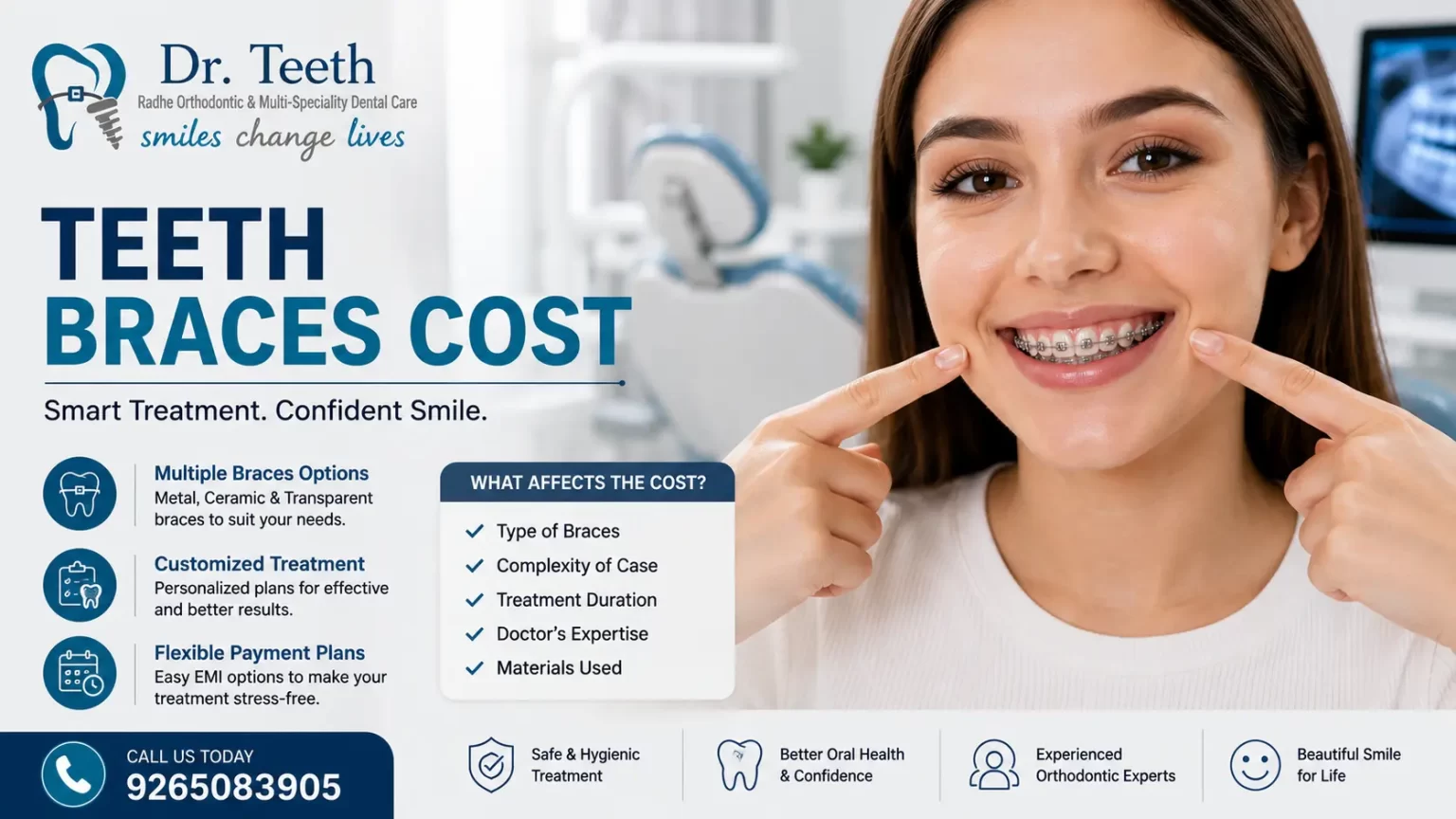
A few things generally shape what you’ll end up paying the type of braces you go with, how complicated your tooth movement is, how long treatment takes, and how much monitoring your case needs along the way. We’ll get into each of these shortly. But the short version is this: if you want a number you can actually trust, you need an orthodontic evaluation, not a guess based on what a friend paid or what you read on a forum.
Metal Braces – A Traditional Orthodontic Option
Metal braces are what most people picture when they think “braces.” Stainless steel brackets, a wire running through them, tightened periodically it’s a method that’s been refined for decades, and it still works.
What metal braces do well is handle tough cases. If someone has significantly crowded teeth, a noticeable overbite, or a crossbite that needs real correction, metal braces tend to give the orthodontist more control over how the teeth move. They’re sturdy, they don’t break easily, and they’re generally considered a dependable workhorse in orthodontics.
The obvious downside is visibility. They’re metal, they’re on your teeth, and people will notice them. For a lot of patients kids, teens, and plenty of adults too that’s simply not a dealbreaker. But if appearance matters more to you, it’s worth knowing there are other paths.
Ceramic Braces – A More Discreet Alternative
Ceramic braces do basically the same job as metal ones brackets, wire, gradual movement but the brackets themselves are tooth colored or clear instead of metallic. From a few feet away, they’re far less obvious.
This makes them a popular pick for people who want effective treatment but aren’t thrilled about a mouth full of visible metal. The catch is that ceramic brackets are a bit bulkier and more prone to chipping than steel ones, so they need slightly more careful handling and if you’re not diligent about staining foods and drinks, they can discolor over time.
In terms of cost, ceramic braces usually land somewhere in the middle. Less conspicuous than metal, but generally more affordable than some clear aligner systems.
Transparent Braces – What Are They?
Transparent braces (also called clear braces) cover more than one type of appliance. Sometimes it means clear ceramic brackets; other times it refers to a series of removable clear aligners that you swap out every couple of weeks as your teeth shift.
The big draw here is discretion from a distance, most people won’t even notice you’re wearing them. They also tend to suit people whose daily life involves a lot of talking in public, whether that’s work meetings, teaching, or anything camera facing. Some systems are removable too, which means eating and brushing aren’t complicated by brackets and wires.
That said, transparent braces aren’t automatically the right call for every case. If someone has severe crowding or a bite issue that needs significant force to correct, clear aligners may not offer enough control on their own. This is exactly the kind of thing an orthodontist needs to assess in person.
Metal vs Ceramic vs Transparent Braces
A quick side by side to make the differences easier to picture:
Appearance
Metal is the most visible option by far. Ceramic blends in better since the brackets match your teeth. Transparent braces are generally the least noticeable of the three.
Durability
Metal braces hold up the best under daily wear and tear. Ceramic is strong but a little more fragile. Clear aligners are durable too, as long as you don’t misplace them or leave them somewhere they can warp.
Maintenance
Metal needs regular brushing around the brackets to avoid food traps. Ceramic needs extra attention to staining. Aligners need to be cleaned separately and actually worn for the recommended hours a day, which takes discipline.
Comfort
All three take some getting used to at first. Removable aligners give you more flexibility around meals, while fixed braces stay in place the whole time.
Suitable cases
Metal handles complex movement best. Ceramic works for a wide range of moderate cases. Transparent options are usually best for mild to moderate corrections, depending on the exact system used.
Treatment considerations
Your orthodontist isn’t just thinking about how it looks. Jaw alignment, long term bite health, and how your teeth will hold their new position all factor into the recommendation.
Keywords
Teeth Braces Cost